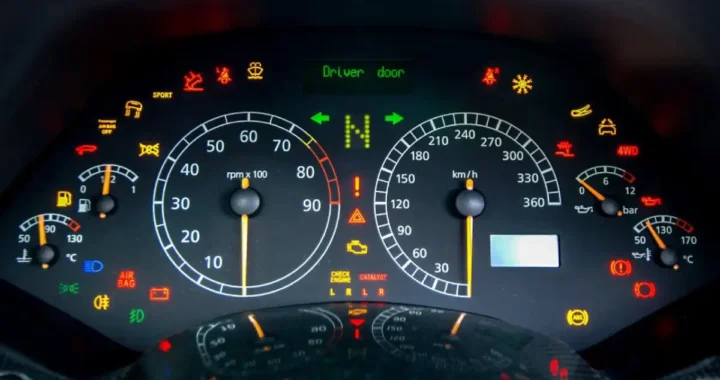

That glowing amber icon on your dashboard—the check engine light—can turn any drive into a worry session. The good news? It doesn’t always mean a costly trip to the mechanic. In many cases, the cause is simple, safe, and fixable in your own driveway. Below, we’ll break down why the light comes on and three easy repairs you can handle yourself.
What the Check Engine Light Actually Means
Your car’s onboard computer constantly monitors engine performance, emissions, and key sensors. When it detects a reading outside normal range—even slightly—it turns on the check engine light. While some triggers (like a failing transmission) need professional attention, many are minor issues you can solve with basic tools.
Important safety note: If the light is flashing, pull over safely and call a tow truck. A flashing light signals a severe misfire that can damage your catalytic converter.
3 Easy Fixes You Can Do at Home
1. Tighten or Replace Your Gas Cap
The problem: A loose, cracked, or missing gas cap allows fuel vapors to escape. This triggers an evaporative emissions system fault (often code P0457), and the computer turns on your check engine light.
The fix:
- Turn off the engine.
- Remove the gas cap and inspect the rubber seal for cracks or dirt.
- Wipe the seal clean, then screw the cap back on until you hear 3–4 clicks.
- Drive normally for a day or two. The light often turns off by itself after a few driving cycles.
If it doesn’t work: Buy a replacement cap (around $10–$20). Most auto parts stores carry universal or vehicle-specific caps.
2. Clean or Replace the Mass Air Flow (MAF) Sensor
The problem: The MAF sensor measures air entering the engine so it can add the right amount of fuel. When dirt or oil residue coats the sensor, your engine may run rough, hesitate, or waste gas—and the check engine light comes on (common codes: P0101–P0104).
The fix:
- Locate the MAF sensor between the air filter box and the engine intake tube.
- Buy a can of MAF sensor cleaner (not carburetor or brake cleaner—those can destroy the sensor).
- Unplug the sensor and remove it (usually two screws).
- Spray 10–15 short bursts onto the tiny wire or plate inside. Do not touch it with your fingers or a brush.
- Let it dry completely (5–10 minutes), then reinstall.
- Reconnect the battery negative terminal if you disconnected it; otherwise, just start the car and drive.
Result: A clean MAF sensor often restores smooth idling and turns off the light within 20–50 miles.
3. Replace a Faulty Spark Plug or Ignition Coil
The problem: A worn spark plug or failed ignition coil causes a cylinder to misfire. You might feel a jerking or stuttering sensation, especially uphill or under acceleration. The check engine light typically flashes briefly or stays steady with codes like P0301 (cylinder 1 misfire) through P0308.
The fix (basic version for 4-cylinder engines):
- Buy a pre-gapped spark plug and an ignition coil for your specific vehicle (about $25–60 total for one cylinder).
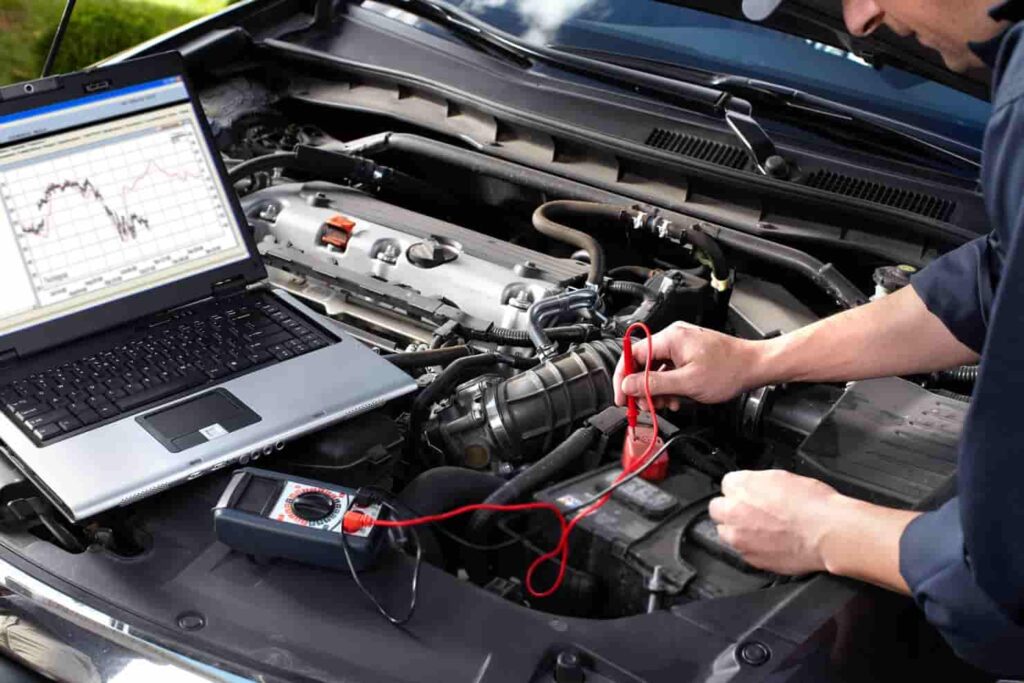
- Locate the cylinder that’s misfiring using a $20 OBD2 code reader (many auto parts stores lend them for free).
- On a cold engine, remove the plastic engine cover.
- Unplug the electrical connector from the ignition coil on the problem cylinder.
- Remove the coil bolt, then pull the coil straight up.
- Pull the old spark plug with a spark plug socket and ratchet.
- Install the new plug by hand first (to avoid cross-threading), then tighten slightly with the ratchet.
- Push the new coil into place, reinstall the bolt, and plug in the connector.
- Start the engine. The light should go out after a few minutes of driving.
For V6 or V8 engines: The rear cylinders can be hard to reach. If you’re not comfortable, stop and see a mechanic—but front cylinder replacements are still very DIY-friendly.
What If None of These Work?
If you’ve tried all three fixes and the light remains on after 50 miles of driving, the problem is likely more complex: a failing oxygen sensor, clogged catalytic converter, or electrical issue. At this point, visit a trusted mechanic. However, you’ve already ruled out the most common and easiest causes—saving yourself over $150 in diagnostic fees.
A Final Pro Tip
Buy a basic OBD2 Bluetooth scanner (as low as $15 online). Pair it with a free app like Torque (Android) or Car Scanner (iOS). You’ll see the exact code triggering the light. Combine that code with “DIY fix for [your car model]” in a search, and you’ll solve 80% of check-engine-light problems without ever leaving home.
Don’t ignore that light—but don’t panic either. Start with the gas cap, then the MAF sensor, then the spark plugs. Chances are, you’ll be back on the road with a clear dashboard in less than an hour.